Why are my dogs ears hot is one of the most common questions dog owners ask, and the answer ranges from harmless to urgent.
Quick Answer
Quick Answer: Dog ears feel hot primarily due to vasodilation (heat release after exercise, excitement, or warm weather).
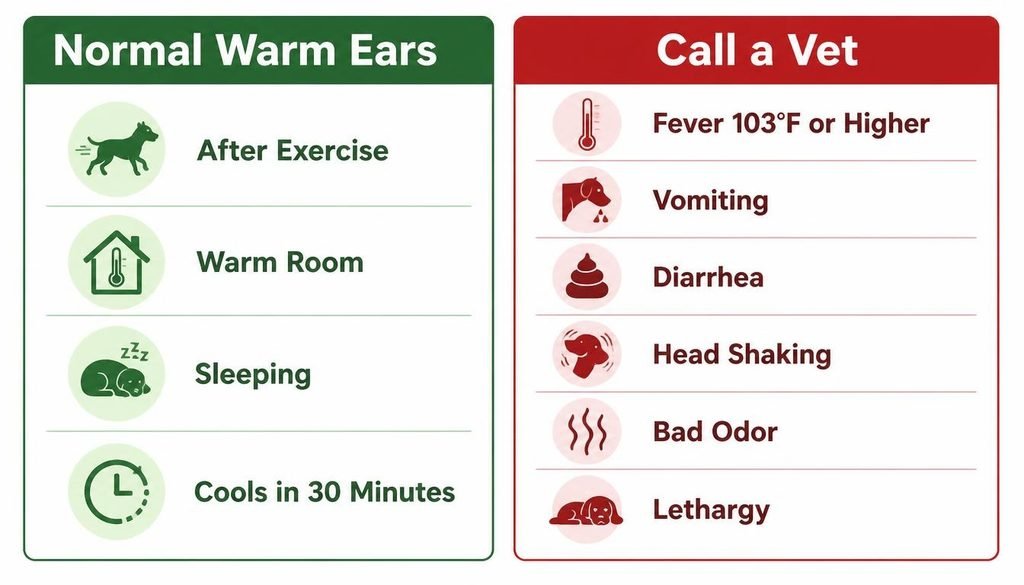
When to call a vet:
- Local Signs: Persistent redness, swelling, foul odor, or frequent head shaking.
- Systemic Signs: Fever above 103°F, vomiting, diarrhea, or severe lethargy.
Diagnostic Table: What Your Dog’s Hot Ears May Mean
| Observed Symptom | Primary Root Cause | Actionable Fix / Medical Response |
|---|---|---|
| Warm ears after play or a walk, cooling within 20 to 30 minutes | Normal vasodilation and heat release | Offer water and rest in a cool room. No treatment needed. |
| Hot ears with odor, discharge, redness, or head shaking | Ear infection (otitis externa), bacterial or yeast | Book a veterinary exam. Do not insert anything into the canal. |
| Hot ears with lethargy, poor appetite, shivering | Fever from infection or inflammation | Take a rectal temperature. Call your vet if it is above 103°F. |
| Hot, red, itchy ears with scratching or paw licking | Allergic dermatitis (food or environmental) | Veterinary allergy workup and an approved ear cleaner. |
| Dark, crumbly debris and intense itching | Ear mites (Otodectes cynotis) | Veterinary diagnosis and a prescribed parasite treatment. |
| Ears warm only at night or during sleep | Bedding heat, warm room, sleep vasodilation | Adjust bedding and room temperature. Recheck in the morning. |
| Hot ears with heavy panting, drooling, weakness | Hyperthermia or heatstroke | Move to a cool place and call an emergency vet immediately. |
Understanding Dog Ear Physiology and Heat Regulation
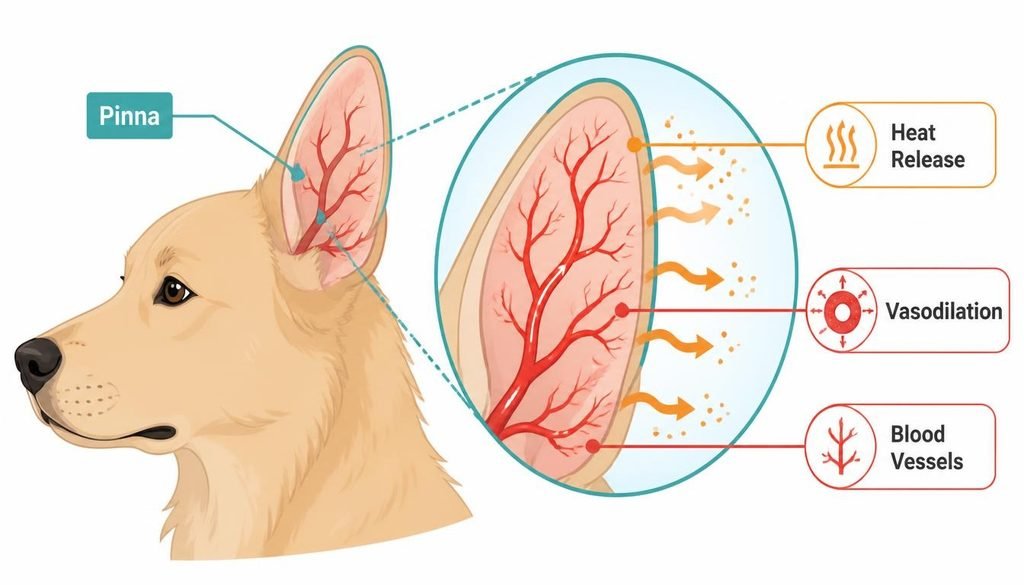
Dogs have limited sweat glands, so they rely on panting, the paw pads, and the ears for thermoregulation. The pinna (the visible ear flap) is thin and packed with blood vessels close to the skin surface. When the body needs to shed heat, those vessels widen, a process called vasodilation, and warm blood flows through the ear flap. This makes the ear feel hot to the touch.
Physiological heat is temporary and has a clear trigger such as exercise, excitement, sun exposure, a warm room, or deep sleep. The ears cool down on their own once the trigger passes. Pathological heat comes from inflammation, infection, or fever. It lingers and usually comes with other signs such as redness, odor, swelling, pain, or changes in behavior.
A common follow up is whether dogs ears are supposed to be cold. They are not. Healthy ears usually feel comfortably warm, similar to or slightly warmer than your hand. Ears that feel cold, together with pale gums or weakness, can point to poor circulation or shock and need urgent attention.
Common Reasons Why Are My Dogs Ears Hot
Normal Vasodilation After Activity, Emotion, or Sleep
Running, playing, anxiety, and excitement all raise body heat. The ears act like radiators. If your dog is otherwise bright, eating, and drinking, warm ears after activity are normal.
Warm Rooms, Thick Coats, and Sun Exposure
A heavy coat, a heated home, a car, or direct sun can make the ears feel hot. Dogs with pale or thinly furred ears can also get sunburn, which feels hot and looks pink or red.
Ear Infections (Otitis Externa)
Otitis externa is inflammation of the outer ear canal, most often caused by bacteria or yeast. Signs include redness, a musty or sour smell, yellow or brown discharge, pain when the ear is touched, and tilting the head. Floppy eared breeds and dogs that swim often are at higher risk because moisture stays trapped in the canal.
Ear Mites
Ear mites (Otodectes cynotis) cause intense itching and dark, crumbly debris that looks like coffee grounds. They spread easily between pets and are more common in puppies. The irritation and scratching can make the ear flap warm and red.
Allergic Dermatitis
Food and environmental allergies often show up in the ears first. Allergic dermatitis can cause hot, red, itchy ears, often along with paw licking, skin redness, and recurring infections.
Fever and Systemic Infection
A true fever means the whole body is running hot. A systemic infection or inflammatory illness can raise core temperature, and the ears may feel hot as a result. Fever is usually accompanied by tiredness, reduced appetite, shivering, or hiding. Ear touch alone cannot confirm a fever, so measure the temperature.
Aural Hematoma and Injury
Repeated head shaking or scratching can rupture small vessels in the ear flap, causing a swollen, warm, cushion like pocket called an aural hematoma. This needs veterinary treatment.
Heat Stress and Hyperthermia
Hyperthermia occurs when body temperature rises dangerously because the dog cannot cool itself. Heavy panting, drooling, bright red gums, and weakness with hot ears are an emergency.
For additional perspective on why ears feel warm, you can read the Windmill Vet explanation of hot dog ears and the Millis Animal Hospital guide to warm dog ears.
Step-by-Step Diagnostic Protocol for Dog Owners
Step 1: Physical Pinna and Ear Canal Inspection
- Compare both ears with each other. One hot ear suggests a local problem such as infection, a foreign object, or a hematoma. Two equally warm ears are more often physiological.
- Look at the inside of the ear flap for redness, swelling, scabs, or dark debris.
- Smell the ear. A sour, musty, or foul odor suggests infection.
- Gently touch the base of the ear. Flinching, yelping, or pulling away signals pain.
- Do not push cotton swabs or any object into the canal.
Step 2: Accurate Body Temperature Measurement
A normal dog body temperature is 101°F to 102.5°F (38.3°C to 39.2°C). A reading above 103°F (39.4°C) is considered a fever. A reading of 104°F or higher is urgent, and 106°F is a life threatening emergency.
Rectal method (most reliable):
- Use a digital pet or rectal thermometer and clean it with pet safe disinfectant.
- Apply a water based lubricant to the tip.
- Ask a helper to steady your dog, standing or lying on the side.
- Lift the tail gently and insert the tip about one inch (half an inch to one inch for small dogs).
- Hold still until the thermometer signals, usually within 10 to 60 seconds depending on the model.
- Remove, read, and clean the thermometer. Reward your dog with a treat.
Tympanic (ear) method:
- Use only a tympanic thermometer designed for pets.
- Gently pull the ear flap back and insert the probe into the horizontal part of the canal, angled toward the eardrum.
- Hold until it signals. Ear infections, wax, and poor placement can give inaccurate results, so confirm unusual readings with a rectal measurement.
Never use a human forehead thermometer or touch alone to judge fever.
Step 3: Behavioral and Multiple Symptom Screening
Check for appetite changes, lethargy, vomiting, diarrhea, shivering, panting at rest, head shaking, scratching, drooling, and pale or bright red gums. Note when symptoms began and whether they are getting worse. One mild sign with a normal temperature is very different from several signs together.
Specific Clinical Scenarios and Red Flag Combinations
Dogs Ears Hot but No Fever
If the thermometer reads normal and your dog acts well, the cause is usually vasodilation, warm surroundings, or early irritation. Recheck in 30 to 60 minutes and inspect the ears again. Persistent heat without fever points toward a local issue such as allergy, mild infection, or mites.
Dogs Ears Hot Shaking Head
Head shaking with hot ears strongly suggests ear infection, mites, or a foreign object such as a grass seed. Frequent shaking can cause a hematoma. Schedule a veterinary exam within a day or two, sooner if there is pain, swelling, or discharge.
Dogs Ears Hot and Itchy
Hot and itchy ears are most often tied to allergies, yeast, or mites. Look for itching elsewhere on the body, paw chewing, and recurring episodes. A vet can take an ear swab to identify the cause and prescribe targeted treatment.
Dogs Ears Hot at Night
Dogs often sleep curled up, under blankets, or on warm surfaces, and sleep itself involves changes in blood flow. Body temperature also follows a daily rhythm, and late evening exercise or meals can add warmth. If the ears are hot only at night and your dog is comfortable the next morning, adjust bedding and room temperature. Hot ears at night with restlessness, scratching, or discomfort deserve a veterinary check.
Dogs Ears Warm and Diarrhea
Warm ears combined with diarrhea may signal a gastrointestinal infection, dietary upset, parasites, or fever from systemic illness. In puppies or unvaccinated dogs, this combination can indicate serious infections such as parvovirus. Call your vet the same day, especially if there is blood, repeated episodes, or weakness.
Dog with Hot Ears and Vomiting
Hot ears with vomiting can occur with fever, infection, toxin ingestion, pancreatitis, or heat illness. Repeated vomiting, inability to keep water down, a swollen belly, or collapse requires emergency care. Do not wait to see whether it passes.
Emergency Red Flags
Seek urgent veterinary care for any of these:
- Temperature of 104°F or higher
- Heavy panting, drooling, bright red or pale gums
- Weakness, stumbling, or collapse
- Repeated vomiting or bloody diarrhea
- Severely swollen or painful ear
- Hot ears in a puppy, senior dog, or dog with a chronic illness that also seems unwell
For more case examples, see the Noble Vet Clinic article on warm dog ears and the Giddy Pets symptom page for hot dog ears.
Safe Home Remedies and Prevention Protocol
What to Do When Dogs Ears Are Hot
- Move your dog to a cool, shaded, well ventilated space.
- Offer fresh water in small, frequent amounts.
- Place a cool, damp cloth (not ice cold) on the ear flaps for a few minutes. Never use ice directly on the skin.
- Take the temperature using the steps above.
- Recheck the ears and behavior after 30 to 60 minutes.
- Contact your veterinarian if heat persists, a fever is present, or other symptoms appear.
What to Avoid
- Do not give human pain relievers such as ibuprofen or acetaminophen. They can be toxic to dogs.
- Do not pour hydrogen peroxide, vinegar, alcohol, or home mixtures into the ear unless a veterinarian instructs you to.
- Do not use cotton swabs deep in the canal.
- Do not use ice baths or very cold water on an overheated dog, as this can cause shock. Use cool, not icy, water.
Prevention Protocol
- Inspect ears weekly for redness, odor, or debris.
- Dry the ears gently after swimming and baths.
- Use a veterinarian approved ear cleaner at the recommended schedule, especially for floppy eared breeds.
- Keep up with parasite prevention to reduce ear mite risk.
- Work with your vet on allergy control if ear problems keep returning.
- Provide shade, water, and cool resting areas in warm weather.
You can also compare guidance in the Petcube warm ears overview, the AHI article on hot dog ears, the Funny Fuzzy pet encyclopedia entry, and the Arlo Pet guide to red and hot dog ears.
Frequently Asked Questions
Can you tell if a dog has a fever by their ears?
Not reliably. Ears can feel hot from exercise or a warm room even with a normal temperature. The only dependable way to confirm a fever is a thermometer reading above 103°F (39.4°C), ideally taken rectally. Use ear warmth only as a prompt to check.
What do dogs hear when we talk?
Dogs hear the tone, pitch, and rhythm of your voice and learn to recognize familiar words, names, and commands. They respond strongly to emotional tone, so a happy voice and a stern voice mean very different things, even when the words are the same. They do not understand full sentences as people do.
How to treat hot ears in dogs?
Move your dog to a cool place, offer water, and apply a cool damp cloth to the ear flaps, then check body temperature. If heat lingers, or you see odor, discharge, swelling, head shaking, fever, vomiting, or diarrhea, have a veterinarian examine your dog. Never use human medication.
Do dogs get sad when you leave?
Yes, many dogs show distress when left alone. Dogs can feel separation distress, shown by whining, pacing, destructive behavior, or loss of appetite. Gradual departures practice, exercise before leaving, and enrichment toys help. Severe cases may need advice from a veterinarian or behaviorist.
Why are my dogs ears hot but no fever?
Hot ears with a normal temperature usually come from vasodilation, warm surroundings, or mild local irritation such as allergy or early infection. If the heat lasts more than a day, or you notice itching, odor, or head shaking, schedule a veterinary ear exam.
Why are my dogs ears hot at night?
Warm bedding, a heated room, late exercise, and normal changes in blood flow during sleep are common reasons. If your dog is comfortable and the ears return to normal by morning, nighttime warmth is usually harmless. Persistent heat with scratching or restlessness needs a veterinary check.
Are dogs ears supposed to be cold?
No. Healthy dog ears should feel comfortably warm, not cold or hot. Cold ears can result from a chilly environment, but cold ears with pale gums, weakness, or slow responses may signal poor circulation or shock and require urgent veterinary care.
Are warm ears and diarrhea in dogs connected?
They can be. Warm ears with diarrhea may point to fever from a gastrointestinal infection, parasites, or systemic illness. Take your dog’s temperature and call your veterinarian the same day, especially for puppies, seniors, or if blood or repeated episodes occur.
Is a dog with hot ears and vomiting an emergency?
It can be. Hot ears with repeated vomiting, weakness, a swollen belly, or a temperature of 104°F or higher need emergency care. A single mild episode in an otherwise bright dog may be monitored closely, but contact a veterinarian if symptoms continue.
When should I take my dog to the vet for hot ears?
See a veterinarian if hot ears last longer than a day, or appear with fever, odor, discharge, pain, head shaking, vomiting, diarrhea, or lethargy. Go immediately for temperatures of 104°F or higher, collapse, or heavy panting with drooling.
Conclusion and Next Step
Hot ears are often a normal way for your dog to release heat, but they can also be an early sign of infection, allergy, mites, fever, or heat illness. The most reliable approach is to compare both ears, take an accurate temperature, and watch for other symptoms. When heat persists or red flags appear, do not wait.
Take action today: check youif r dog’s ears and temperature using the steps above, write down what you observe, and contact your veterinarian if anything looks abnormal. Early care protects your dog’s comfort and prevents small ear problems from becoming serious.
If you need anymore help you can visit our website.